Author: Alexander Helliwell, Senior Environment Artist
With our recent update, we’ve made a wide range of changes to the natural landscape, and there are still quite a few more in the pipeline. Since landscapes are such a crucial part of Prologue: Go Wayback!, we wanted to give you a closer look at the design decisions behind them.
Muted Vibrancy
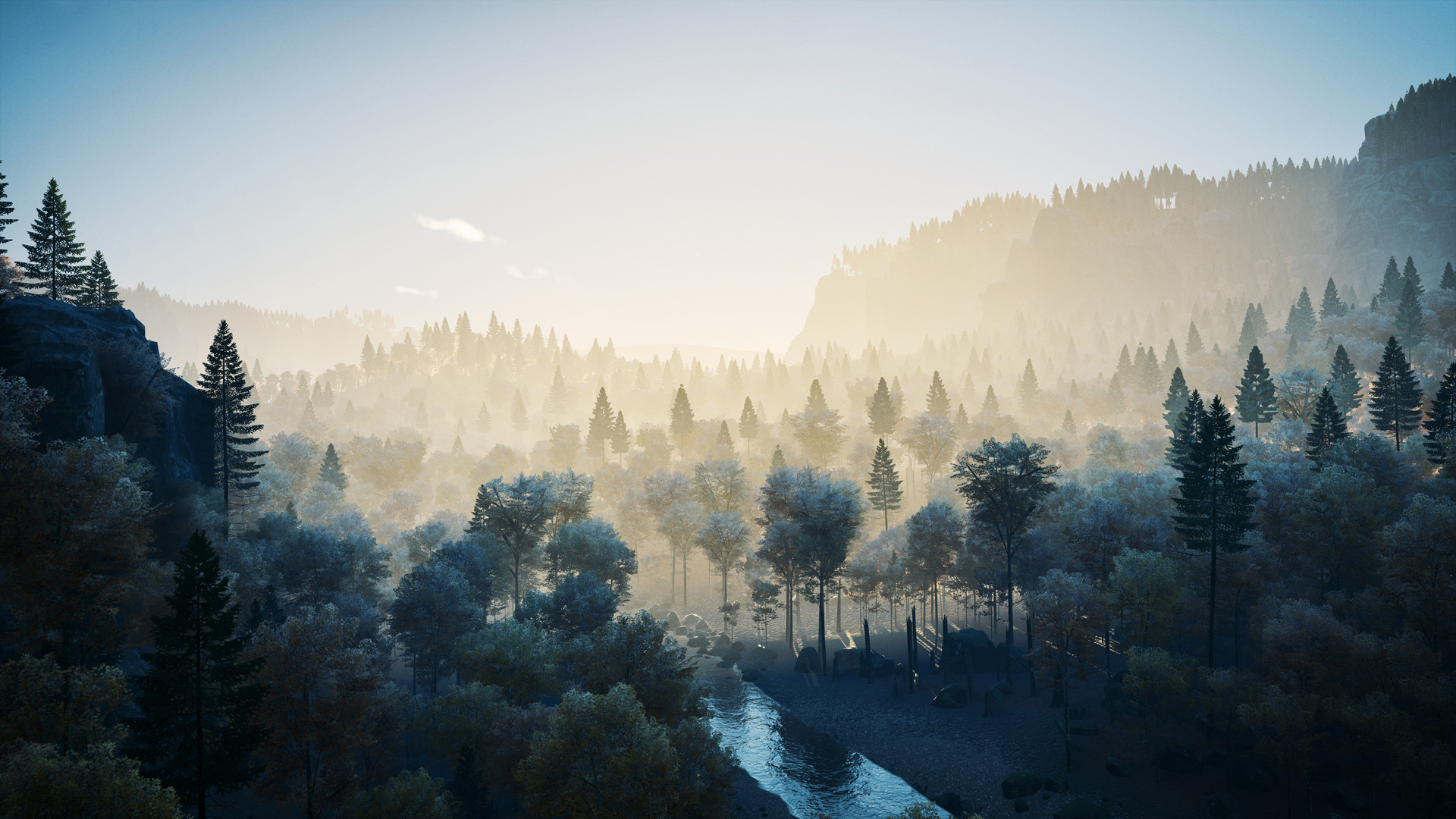
As part of chasing down one of our key art direction pillars “Muted Vibrancy”, we’ve further developed the colouring and blending of our textures and materials. You can now notice deeper colour palettes that also react to weather and soil types too.


Forest Structure
Previously, our forests had a sense of monotony and repetitiveness. This was the result of a shift in habitat variation every 50m, caused by our tile spawning system’s logic. We’ve known for a long time that we wanted to fix this, but couldn’t figure out how best to achieve it, until now.
With the recent update, forests now have a new layer of logic applied to the tile spawning, which maps out areas such as old, young, clearings, dead, and rocky forest areas. This system also maps out areas of high to low calorific growth, affecting where, which, and the quantity of forageable plants appear in different areas. The change is nuanced but it gives a subtle, yet significant impact to the natural feel of the world.
You will now be able to experience gradual, natural changes in the environment as you travel, and gain a clearer sense of your positioning in the world. We intend to use this new spawning logic to intorduce further updates to the forest in the future.
Below is an illustration to help better explain how our tile system has evolved from random to structured.


2 New Systems
We’ve also implemented two powerful new systems into our world generation to allow for deeper interaction and immersion
New Surface Interaction System


In Go Wayback!, we strive to make everything interactable in some form. The art's purpose is to serve gameplay. Since launch, the infamous mud has been a frustrating enemy for many, so we asked ourselves: how do we fix this? How do we make it more realistic? How can we further influence a player's decisions? How can we link this with our other world systems? And how can we make this fun?
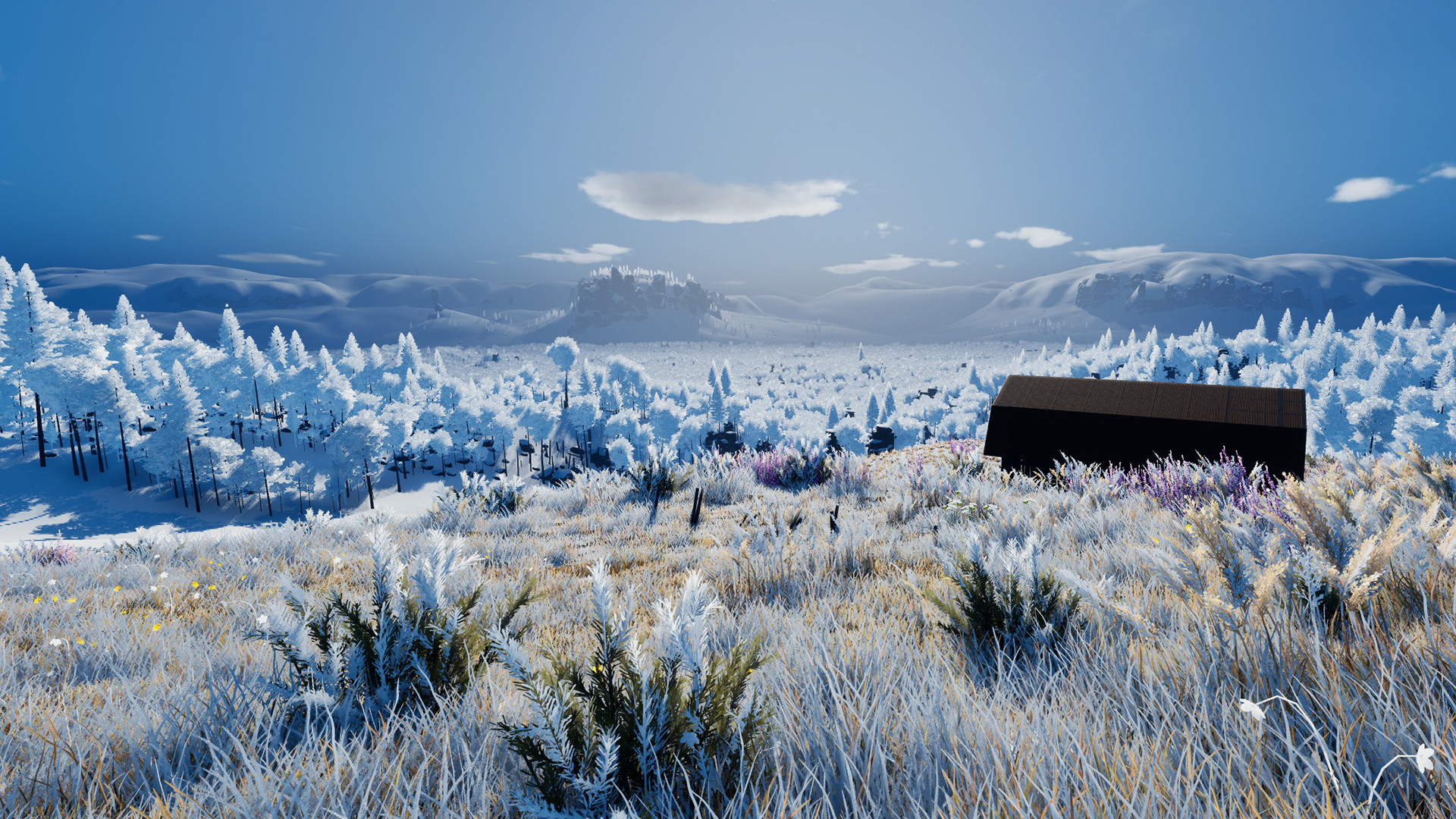
Nicknamed internally as the “surface mutator,” our new surface interaction system allows surface properties to change depending on the weather. As a result, surfaces can go from dry to wet, to frozen, to snowy, each providing different interactions that affect player movement.
To achieve this, we are using three existing global outputs from our world system and applying them, with some logic, to the character and material systems.
Wetness, snow cover, and temperature are the three outputs used to calculate a total of eight different combinations, representing the various states a surface can have.
For the first iteration, we have only applied this system to our muddy, waterlogged terrain. This first implementation acts as a testing ground, allowing us to further develop and refine both interaction and visuals, so you can expect more updates in the future.
Looking ahead, we are working on applying the surface mutator system to other surface types, such as bedrock and still water. These expansions will drive new gameplay scenarios. Rocky cliffs will be one of the areas affected by this system and will be the start of a more challenging climbing system.
This table below represents the eight different combinations generated from the three global system outputs: temperature, wetness, and snow cover.


New Tree Debris System

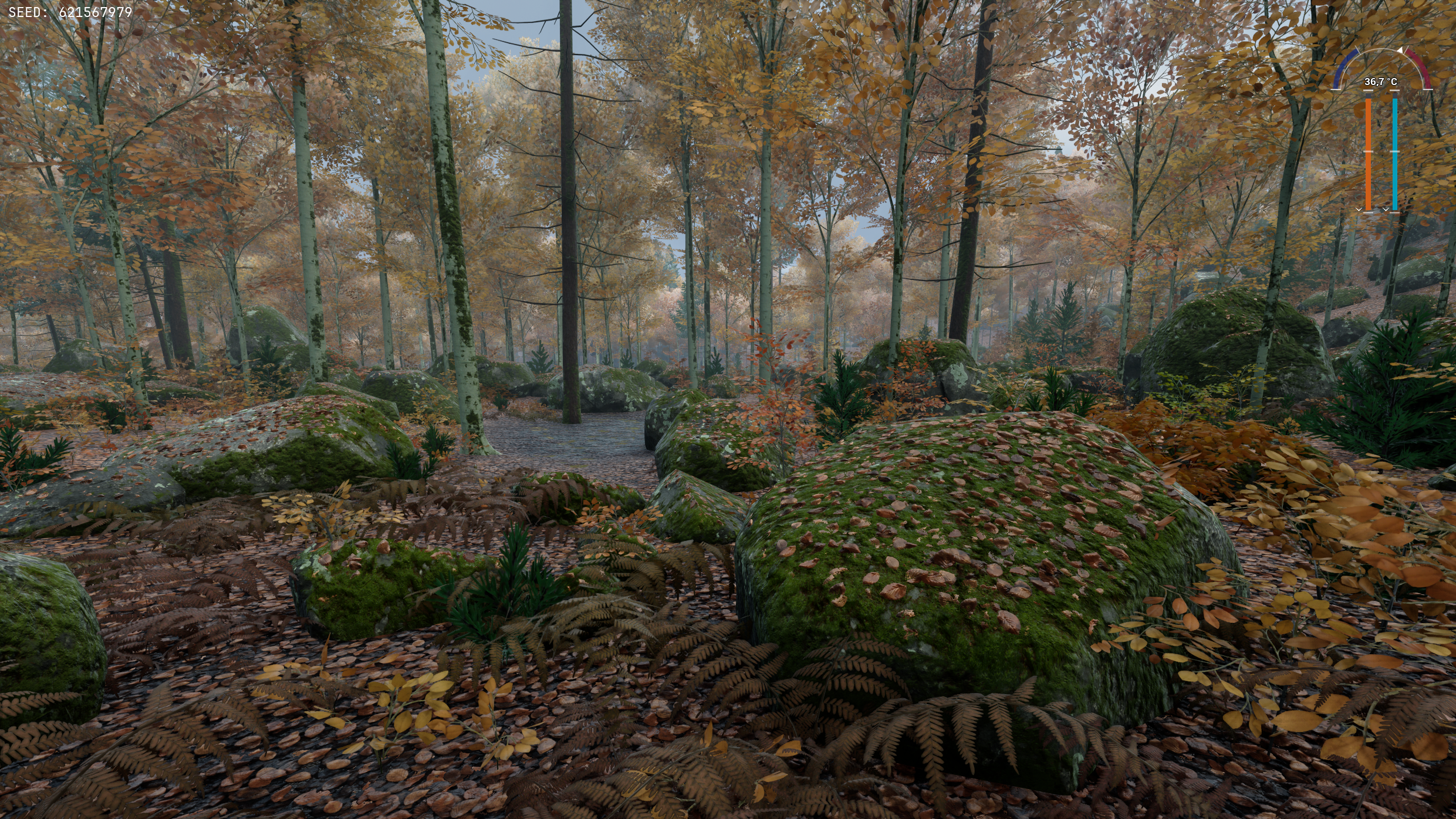
Leaves, leaves, and more leaves. As part of the recent update, you will now be seeing leaves everywhere around throughout our forests.
Making natural environments feel real is weirdly hard, because humans are basically inconsistency detectors for places we know. Forests are familiar in our bones, so if patterns repeat, leaf litter looks too tidy, moss shows up where it shouldn’t, or the wind animates everything the same way, you’ll clock it instantly. You might not be able to explain it, but you’ll feel that “something’s off” within a second.
One of the new ways we’re addressing this is by taking advantage of virtual texturing tools inside Unreal Engine. This allows us to automatically mask out where we want tree debris to appear in relation to the location of trees. Previously, we’ve relied on large global masks to decide where trees and their debris appeared. Moving to virtual texturing masks generated from tree locations allows for more visual accuracy and much faster iteration.
You’ll currently notice beech leaves and spruce needles from our trees covering large areas of our forest. They currently are covering terrain surfaces, rocks, and other tree logs. We're also planning to implement this feature to other surfaces such as cabin roofs, in a future update.
Future Updates


For our long-term vision and how we want to expand and deepen the environment in our world, we aim to increase the variety of natural terrain that you can encounter. The “surface mutator” system is one of these key gameplay systems and will act as a foundation for future expansions.
One future expansion we have in mind is the marshlands, which would be a prime example of how our surface mutator system can be leveraged. The idea is for you to witness the extreme, changing states of the water and choose how you want to interact with them on your journey to the weather tower. Did someone mention ice skates?